Basic Information
| Field | Details |
|---|---|
| Full name | June Erna Steves (née Fremmerlid) |
| Birth | June 29, 1931 — Edmonton, Alberta, Canada |
| Death | December 29, 2011 — Seattle, Washington, U.S. |
| Parents | Harold Fremmerlid, Erna Fremmerlid |
| Spouse | Richard John “Dick” Steves Sr. (married 1951) |
| Children | Rick (b. 1955), Janis (c. 1956), Linda (c. 1958) |
| Residence (notable) | Crown Hill; Kenmore; moved to Edmonds (1967) |
| Known for | Family matriarch; early travel companion to her son; community member |
| Health | Suffered from Alzheimer’s disease in later years |
| Age at death | 80 years |
Early life and roots
June Erna Fremmerlid arrived into the world on June 29, 1931, in Edmonton, Alberta. The child of Norwegian-immigrant parents, she was raised where snow and ski tracks were as familiar as backroads. Her youth threaded together small-town winters and the rugged, outdoor habits of Western Canada. School years in White Rock, then a family move to Seattle, set a north–south arc to her early life: mountains and sea, then the steady pulse of a Pacific Northwest city.
She was one of four children—Harold Jr., Sylvia, Norman, and June—growing up in a family anchored by immigrant determination and the steady work of her father. Those early decades gave her practical skills and an appetite for travel that would later become a seed for another generation.
Family and personal relationships
| Relation | Name | Born / Notable dates | Role |
|---|---|---|---|
| Husband | Richard John “Dick” Steves Sr. | Married 1951 | High-school band director; piano tuner/importer; business partner at home |
| Son | Rick Steves | 1955 | Travel writer & public broadcaster; June’s first travel companion |
| Daughter | Janis Steves | c. 1956 | Sibling in family narrative |
| Daughter | Linda Steves | c. 1958 | Sibling in family narrative |
| Grandson | Andy Steves | — | Founded a travel company for young travelers |
| Granddaughter | Jackie Steves | — | Contributor to family travel writing and blogs |
June’s marriage in 1951 to Dick Steves created a household built around music, small business, and family. The couple ran a piano-import business; they lived, worked, and raised three children in neighborhoods that shifted over time—Crown Hill, then Kenmore, and finally Edmonds in 1967. Within this household June was the steady engine: homemaker, community member, and the person who taught travel as a way of seeing rather than merely visiting.
Career, homefront responsibilities, and achievements
There is no headline career for June in the public record—her accomplishments are domestic and generational. She ran the home front while the family’s piano-import business operated. She helped raise three children through the 1950s and 1960s, and she was an active member in her local church community. Those facts read modestly, but the impact is measurable: one of her children became a widely known travel author and broadcaster; grandchildren founded travel ventures and contributed to family media.
Numbers matter here: three children raised across a span of roughly four years (1955–1958); a family relocation in 1967 that placed them in the community where much of their adult life unfolded; a business that tied them to Europe through the import of instruments—an international link that fed into the family’s travel habits.
Trips that shaped a life
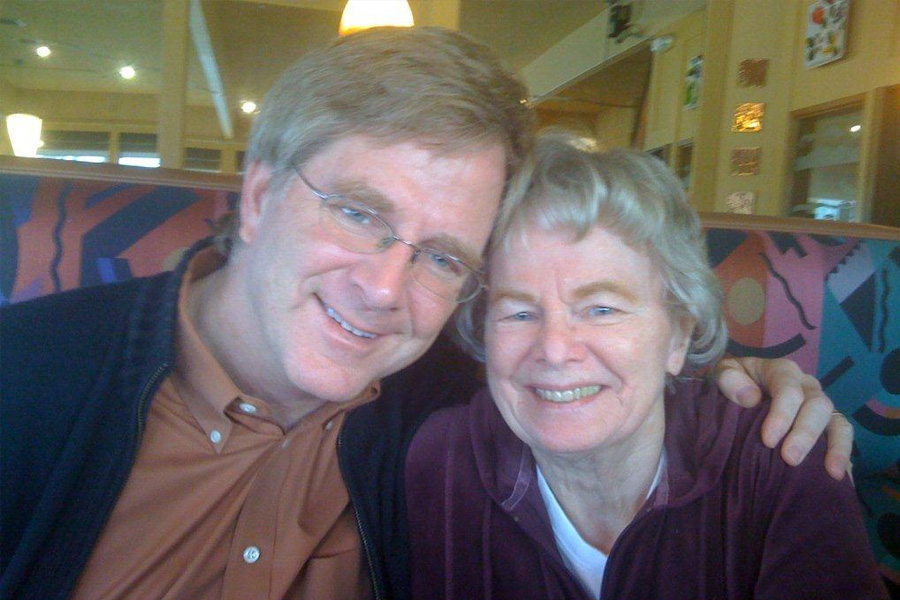
June is often remembered as her son’s “first travel partner.” A trip in 1969 (and other early travels) planted an idea that grew into a vocation for her son—but the image of a mother and child exploring foreign streets is about more than one career. It’s a human hinge: a moment when curiosity met companionship.
She traveled with family to Europe during the late 1960s and beyond, folding herself into the role of companion and co-conspirator for discovery. Those journeys were not flashy tours but formative schooling: narrow streets, foreign trains, and the slow education that comes from being both guardian and student at the same time. For a young traveler, a mother who navigated maps, schedules, and the occasional hiccup is a north star—steady, guiding, quietly luminous.
Later years and health
In later life, June developed Alzheimer’s disease. The illness reshaped family routines and responsibilities. Her husband provided care at home for many of those years. The arc from active traveler and community member to one constrained by memory loss is a difficult, often private turn. She passed away on December 29, 2011, aged 80, after complications associated with a heart attack. Those final dates mark an end in the ledger; they do not, however, erase the earlier years of movement, laughter, and the small practical acts that made a family.
Timeline of key dates and numbers
| Year / Date | Event |
|---|---|
| June 29, 1931 | Birth in Edmonton, Alberta |
| 1951 | Marriage to Richard John “Dick” Steves Sr. |
| 1955 | Birth of son Rick (Richard John Steves Jr.) |
| c. 1956 | Birth of daughter Janis |
| c. 1958 | Birth of daughter Linda |
| 1967 | Family moved to Edmonds, Washington |
| 1969 | Notable early travel(s) to Europe with son Rick |
| Late 2000s | Diagnosed with Alzheimer’s disease (publicly noted in family remembrances) |
| December 29, 2011 | Died in Seattle at age 80 |
How June lived on through family and memory
June’s influence runs like an undercurrent in the family’s public shape. One child became a voice for travel on radio and television; grandchildren launched their own ventures and wrote about journeys; family blogs and posts return to June’s stories on Mother’s Day and in memorial remembrances. The rhythm is simple: personal example became public legacy. Her domestic labor—raising children, keeping a household, supporting a small business—translated across two generations into a culture of travel, curiosity, and practical independence.
She was a quiet catalyst: not a headline-maker but a maker of headlines for others, in the sense that the habits she instilled produced public work, businesses, and media. These are not trophies; they are the arithmetic of influence: one mother, three children, multiple careers, and a ripple that stretches to grandchildren.
Portrait in details
She liked skiing in childhood, an exercise that suggests balance and appetite for terrain. She grew up bilingual in life: the Norwegian family heritage on one side, North American routines on the other. She helped found a local church community in Edmonds and maintained domestic steadiness while her husband and children pursued public-facing work. Those are the contours that remain when the headlines fall away: a life built on place, practice, and the deliberate transmission of curiosity.
Her story reads like a travelogue without a map: small, precise moments—trains boarded, churches attended, pianos tuned—composed into a larger pattern that shaped a family’s path. The pattern is not ornate; it is durable.