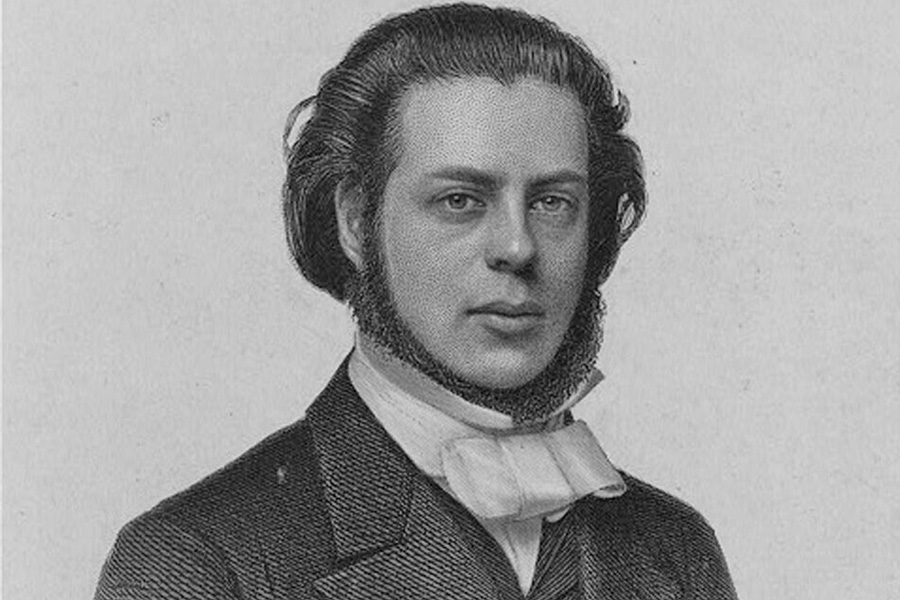
Early Life and Roots in the Guinness Dynasty
I often wonder how a single family name can evoke images of frothy pints and fervent sermons. John Grattan Guinness, born on September 1, 1783, in the bustling heart of Beaumont, Dublin, Ireland, embodied that very paradox. As the youngest son of Arthur Guinness, the visionary brewer who founded the iconic St. James’s Gate Brewery in 1759, and Olivia Whitmore, a steadfast matriarch from a Kildare lineage, John grew up amid the clinking of barrels and the aroma of fermenting hops. Arthur, aged 57 at John’s birth, had already sired 21 children, though only 10 survived the harsh realities of 18th-century life. Olivia, then 41, nurtured this expansive brood with quiet resilience.
John’s middle name, Grattan, nodded to the era’s political firebrand, Henry Grattan, whose calls for Irish parliamentary independence echoed through Dublin’s streets like thunder in a summer storm. Surrounded by siblings like the Reverend Hosea Guinness, Arthur Guinness II who inherited the brewing mantle, Edward, Elizabeth, Benjamin, and others, John navigated a world where family ties intertwined with emerging industrial might. By the early 1800s, as Ireland grappled with colonial tensions, John charted his own course, diverging from the brewery’s frothy paths.
Marriages and the Blossoming of Family Branches
Love and loss wove through John’s life like threads in a intricate tapestry. On February 14, 1810, he married Susanna Hutton, daughter of a prominent Dublin alderman named Henry Hutton. Their union, set against the backdrop of a city pulsing with trade and tradition, produced at least five children between 1817 and 1823. John Grattan Guinness Jr., born October 26, 1817, in Dublin, later wed Sarah Caroline Lamprey and lived until 1871 in London. Susan Guinness followed, though her story faded without descendants. Arthur Grattan Guinness pursued medicine as a physician but left no heirs. Rebekah Guinness married a man named Lockwood, her life similarly unmarked by progeny. Benjamin Guinness, arriving in 1823 amid a Liverpool sojourn, also passed without issue.
Tragedy struck in 1826 with Susanna’s death, leaving John a widower at 43. He remarried on January 5, 1829, to Jane Mary Lucretia Cramer, a widow whose previous husband, John D’Esterre, had met a dramatic end in an 1815 duel with Irish nationalist Daniel O’Connell over Catholic emancipation. This second marriage, rich with historical intrigue, bore fruit in Henry Grattan Guinness on August 11, 1835, and Amelia Jane D’Esterre Guinness around 1840 or 1842. Amelia wed a man named Mason and died young in 1865, buried in Reading Old Cemetery. Henry, however, ignited a spiritual legacy that burned brightly across continents.
Career Path: From Colonial Service to Family Anchor
Ambition called John beyond Dublin’s cobblestones. In his early 20s, around 1800, he commissioned as a captain in the Honourable East India Company, sailing to the exotic shores of India. There, amid the spice-scented winds and colonial outposts, he served in administrative and logistical roles during the company’s expansive era. By 1810, he had returned to Ireland, his military pension a quiet buffer against life’s uncertainties. Unlike his brothers Arthur II, who expanded the brewery into a global force, or Benjamin, who ventured into banking with Guinness Mahon founded in 1836, John avoided the family’s commercial whirlwinds.
His achievements lay in quiet stewardship. With an inheritance from the Guinness fortune, estimated in the millions by modern standards but modest for his branch, he settled into Dublin life by the 1840s. He witnessed the Great Famine ravage Ireland from 1845 to 1852, though records of his direct aid remain elusive. John died on March 3, 1850, in Cheltenham, Gloucestershire, England, at 66, his will ensuring provisions for his survivors. He stood as a pivot, steering his lineage from brewing vats to missionary fields.
The Missionary Legacy and Descendant Trails
John’s son from his second marriage, Henry Grattan Guinness, turned the family story into a religious epic. During the 1859 revival that swept the British Isles like wildfire, Henry, who was born in 1835, became a well-known evangelist by his early 20s, preaching to crowds of tens of thousands. In 1872, he established the East London Institute for Home and Foreign Missions, which by 1878 had trained more than 1,300 missionaries who had traveled to countries like the Congo. Fanny Emma Fitzgerald, Henry’s first wife, was born in 1860 and had nine children before passing away in 1898. In 1903, he remarried Grace Hurditch.
Gershom Whitfield Guinness, one of Henry’s children, was born in 1869, served as a missionary in China until 1927, and fathered Henry Whitfield Guinness in 1908. Another kid, Geraldine Taylor, married Howard Taylor and worked with the China Inland Mission to document missionary activities. The Regions Beyond Missionary Union was headed by Henry Grattan Guinness Jr. In more subdued ways, Cecelia Lee Guinness continued the tradition. Ruth Eileen Guinness (born 1900), who married statistician Ronald Fisher in 1917 and passed away in 1982, Cecilia McCarthy, and Howard Wyndham Guinness (born 1903) were among the great-grandchildren.
The larger Guinness tree extends far beyond. The Protestant tradition was established by John’s great-grandparents, John Grattan and Martha Mason. The name was echoed by distant relatives, such as a contemporary John Grattan Guinness, a singer and venue founder who was born in New Zealand on September 28, 1942, and passed away in Auckland on March 3, 2018, at the age of 75. Part of the story is revealed by the numbers: John had at least seven children from his two marriages, whereas Arthur Guinness fathered 21. However, the real test is how many lives—from faraway converts to brewery workers—are impacted.
| Family Member | Relationship | Birth-Death | Key Notes |
|---|---|---|---|
| Arthur Guinness | Father | 1725-1803 | Founded Guinness Brewery in 1759; 21 children total. |
| Olivia Whitmore | Mother | 1742-1814 | From Kildare; bore 10 surviving children. |
| Susanna Hutton | First Wife | 1786-1826 | Married 1810; mother of five children. |
| Jane Mary Lucretia Cramer | Second Wife | Unknown-Unknown | Married 1829; widow of duelist John D’Esterre. |
| John Grattan Guinness Jr. | Son | 1817-1871 | Married Sarah Caroline Lamprey; no notable heirs. |
| Henry Grattan Guinness | Son | 1835-1910 | Evangelist; founded missions; 9 children. |
| Gershom Whitfield Guinness | Grandson | 1869-1927 | Missionary in China. |
| Geraldine Taylor | Granddaughter | 1865-1949 | Writer and missionary in China. |
| Ruth Eileen Guinness | Great-Granddaughter | 1900-1982 | Married Ronald Fisher; 8 children. |
Extended Timeline and Influences
John’s life unfolded against a canvas of change. 1783 marked his birth amid Ireland’s push for autonomy. By 1800, his East India service exposed him to global empires. The 1810 wedding to Susanna heralded family growth, only for 1826 to bring sorrow. His 1829 remarriage coincided with Catholic emancipation debates, linking personally through Jane’s past. 1835 saw Henry’s arrival, a spark for future revivals. In the 1840s, as Dublin hummed, John anchored his household. His 1850 death closed an era, but descendants like Henry preached to 10,000-strong crowds in England, Wales, Ireland, Norway, and America by the 1860s.
Influences rippled outward. Henry’s alliances with figures like Lord Shaftesbury, D.L. Moody, William Booth, and Tom Barnardo built networks of charity: maternity homes, health clinics, soup kitchens, and schools in London’s East End. By 1872, non-fee-paying colleges like Harley in Bow and Cliff in Derbyshire trained missionaries without barriers. Gershom’s China work from the 1890s aided medical missions, while Geraldine’s writings captured the era’s zeal. This branch, numbering hundreds across generations, shifted from 18th-century brewing to 20th-century global outreach.
FAQ
Who were John Grattan Guinness’s parents and how did they shape his early life?
Arthur Guinness and Olivia Whitmore formed the foundation. Arthur’s brewery success provided stability, while Olivia’s nurturing raised a large family. This environment instilled resilience in John, guiding him toward independent paths like military service.
What were the key details of John Grattan Guinness’s marriages and children?
He first married Susanna Hutton in 1810, fathering five children including John Jr. and Benjamin, most without heirs. After her 1826 death, he wed Jane Cramer in 1829, producing Henry in 1835 and Amelia in the early 1840s, launching the missionary lineage.
How did John Grattan Guinness’s career differ from his siblings?
While brothers like Arthur II expanded brewing and Benjamin entered banking, John served as a captain in the East India Company around 1800, focusing on colonial duties in India before returning to Dublin without commercial pursuits.
Who were some notable descendants of John Grattan Guinness and their achievements?
Henry Grattan Guinness preached globally and founded missions in 1872. Grandson Gershom missioned in China until 1927. Granddaughter Geraldine Taylor wrote on missionary life. Great-granddaughter Ruth Eileen married Ronald Fisher, blending faith with science.
What role did John Grattan Guinness play in the family’s shift to missionary work?
As a transitional figure, John’s second marriage and son Henry pivoted the lineage from industry to evangelism, establishing institutions that trained over 1,300 missionaries and aided poverty-stricken communities.