Early Roots in Tennessee Soil
I often think of Fannie S. Clay’s beginnings as seeds planted in the fertile yet unforgiving earth of post-Reconstruction Tennessee. Born in 1891 in Ripley, Lauderdale County, she entered a world still echoing with the chains of slavery. Her parents, Elen Gilliland Clay and Hugh Clay, had endured that very bondage before emancipation carved out fragile freedoms. Ripley, a small town with about 1,000 souls at the turn of the century, offered limited horizons for a young Black girl. Yet, Fannie pursued education with quiet determination. By 1910, at age 19, she graduated from Lauderdale County Training School, a beacon for African American youth in the segregated South. This milestone propelled her family northward. They first settled in Memphis, where urban pulses quickened. Soon after, Fannie ventured to Chicago around 1910 to 1920, joining the Great Migration’s human river flowing toward opportunity. In that bustling city, skyscrapers loomed like promises, and jazz notes floated in the air. I imagine her navigating crowded streets, her resolve hardening like steel in a forge.
Family Bonds Forged in Adversity
Family, for me, always feels like the invisible threads holding a tapestry together, and in Fannie’s case, those threads were woven from resilience. Her mother, Elen Gilliland Clay, embodied the quiet strength of generations. Born into slavery, Elen raised Fannie amid the Jim Crow era’s shadows, instilling values of perseverance. Hugh Clay, her father, shared that burdened history as a former slave. He labored to support their household, enabling Fannie’s education and eventual moves. Records show no siblings for Fannie, leaving her as the sole documented child in this tight-knit unit. This scarcity of details highlights the gaps in African American genealogies from that time, like missing pages in a weathered book. No extended kin appear in the annals, perhaps lost to time or migration’s disruptions. Yet, these parents represented a bridge from enslavement to fragile autonomy, their lives a testament to survival’s arithmetic: one day plus one struggle equaling progress.
To visualize her immediate family circle, I’ve compiled this simple table:
| Family Member | Relationship | Key Details |
|---|---|---|
| Elen Gilliland Clay | Mother | Born into slavery; raised Fannie in post-Reconstruction Tennessee; symbolized resilience in African American family narratives. |
| Hugh Clay | Father | Former slave; provided for the family post-emancipation; supported Fannie’s schooling and relocations. |
| Bill “Bojangles” Robinson (Luther Robinson) | Spouse (1922-1943) | Renowned tap dancer and actor; Fannie managed his career; they shared over two decades of partnership in entertainment and advocacy. |
This table captures the essence of her known relations, sparse yet profound.
A Serendipitous Union: Marriage to Bill Robinson
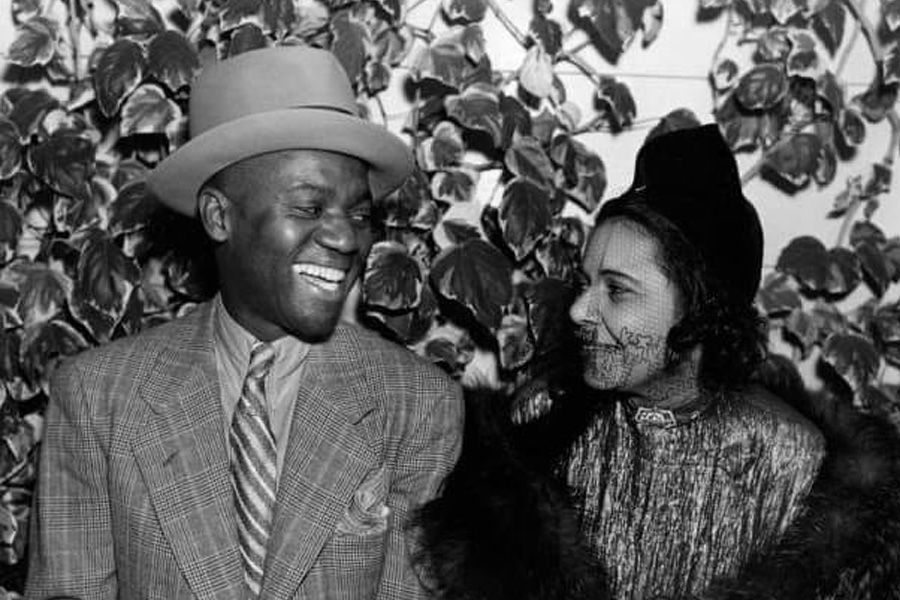
Like the taps of Bill “Bojangles” Robinson’s feet, I think fate dances in surprising rhythms. Around 1920, Fannie met Luther Robinson, better known as Bojangles, in a Chicago ice cream shop. With his gravity-defying steps, he was already a rising sensation in vaudeville. Their bond ignited immediately. They were married on January 27, 1922, combining his extravagant flare with her calm hand. Before their divorce in 1943, Fannie changed her name to Fannie Robinson, a name that was whispered around the entertainment industry for 21 years. Their narrative is made more poignant by the fact that they were childless. Robinson’s life was full of ups and downs. He married Elaine Plaines after his first marriage to Lena Chase ended before Fannie. However, in many respects, it was an equal collaboration with Fannie. Throughout his career, she oversaw his finances, arranged deals, and managed his schedule as he earned over $2 million. A large portion of his donations to charities for children and Harlem issues, as well as the installation of a traffic light for safety in 1930s Harlem, came from his generosity. Her behind-the-scenes choreography supports his limelight solos, so I see their relationship as a duet.
Behind the Curtain: Career and Achievements
Examining Fannie’s work life is like removing the stage velvet to see the fame apparatus. She worked as Robinson’s manager and secretary starting in 1922, a position requiring accuracy during a time of racial discrimination. Black artists were paid pennies compared to their white counterparts, but by the 1930s, Robinson was the highest-paid African American singer, earning up to $6,600 per week. Fannie overcame these challenges by planning Broadway revues such as 1928’s Blackbirds and touring. They were co-founders of the Negro Actors Guild of America in the 1930s, a group that fought for equitable pay and working conditions for Black performers. At its peak, this guild had more than 1,000 members and fought against Hollywood’s sexism. In the 1940s, Fannie also played a role in organizing social events that brought together Black aristocratic networks in Manhattan and Los Angeles. Her calm grace can be seen in photographs from 1941 by Carl Van Vechten and 1929 by the National Vaudeville Artists. Her trail vanishes after her 1943 divorce; she remained in New York until her death in 1969. Her influence reverberates like echoes in an empty theater, but no independent wealth or jobs emerge.
An Extended Timeline: Milestones in Motion
Timelines, to me, are rivers carving through history, and Fannie’s flows from rural quiet to urban crescendo. Here’s a detailed chronicle:
| Year | Event | Details |
|---|---|---|
| 1891 | Birth | Emerges in Ripley, Tennessee, to Elen and Hugh Clay, amid a population of roughly 1,000. |
| 1910 | Graduation and First Moves | Completes Lauderdale County Training School at 19; family relocates to Memphis, then Fannie to Chicago. |
| 1920 | Chance Encounter | Meets Bill Robinson in a Chicago ice cream parlor, sparking a life-altering romance. |
| 1922 | Marriage | Weds Robinson on January 27; assumes managerial duties in his burgeoning career. |
| 1920s | Vaudeville Support | Handles business for Robinson’s tours; they reside in urban hubs like Chicago and New York. |
| 1928 | Broadway Peak | Assists with Blackbirds of 1928; Robinson’s fame soars, earning thousands weekly. |
| 1929 | Public Portraits | Appears in National Vaudeville Artists souvenir, capturing her role in entertainment circles. |
| 1930s | Guild Foundation | Co-founds Negro Actors Guild; advocates for over 1,000 Black performers amid Depression-era struggles. |
| 1930s-1940s | Financial Oversight | Manages Robinson’s $2 million lifetime earnings, much donated to causes like Harlem charities. |
| 1940s | Social Hosting | Organizes parties in Los Angeles and Manhattan, fostering Black Hollywood connections. |
| 1941 | Photographed Moments | Featured in Carl Van Vechten’s 1941 images, highlighting her poised presence. |
| 1943 | Divorce | Ends 21-year marriage; retreats from public eye, residing in New York. |
| 1969 | Passing | Dies at age 78; buried possibly in Tennessee or New York family plots. |
This table maps her journey’s beats, each date a step in her quiet march.
Echoes in Modern Media: Recent Mentions
In today’s digital age, I find Fannie’s story resurfacing like ripples in a pond long after the stone sank. As of January 2026, social media platforms buzz with historical nods. On X, posts mark January 27 marriage anniversaries, sharing grainy photos of the couple. Black history threads weave her in as an unsung hero, her managerial acumen praised in discussions of Robinson’s films with Shirley Temple. No major news breaks tie to her, given over 50 years since her passing, but blogs on vaudeville and African American genealogy delve deeper. Sites like Black Ripley label her an “honorable mention” in Tennessee lore, emphasizing her migration and partnership. Ancestry forums speculate on Clay family extensions, though unverified. These mentions paint her as a supportive force, her life a subtle undercurrent in entertainment’s grand narrative.
FAQ
Who were Fannie S. Clay’s parents?
Elen Gilliland Clay and Hugh Clay formed the bedrock of Fannie’s early world. Both born into slavery, they navigated emancipation’s aftermath in Tennessee. Elen provided nurturing guidance, while Hugh’s labor ensured stability. Their influence shaped Fannie’s pursuit of education and northward ambitions, a legacy of endurance passed down.
Did Fannie S. Clay have any siblings or children?
No siblings emerge in historical records, suggesting Fannie as an only child or details lost to time. With Bill Robinson, they shared no offspring during their 1922-1943 marriage. This absence adds a layer of introspection to her story, focusing her energies on partnership and advocacy rather than expanding a family line.
What was Fannie S. Clay’s role in Bill Robinson’s career?
Fannie acted as the steady rudder to Robinson’s sailing ship. From 1922, she managed schedules, finances, and negotiations. Amid his $2 million earnings, she oversaw philanthropy, like Harlem donations. Co-founding the Negro Actors Guild in the 1930s, she championed equity for Black artists, her efforts amplifying his stardom.
When and where did Fannie S. Clay meet Bill Robinson?
Around 1920, in a Chicago ice cream parlor, their paths crossed serendipitously. This sweet-spot encounter blossomed into marriage by 1922. Chicago’s vibrant scene, part of the Great Migration, set the stage for their union, blending her grounded nature with his performative genius.
What achievements is Fannie S. Clay known for?
Beyond marriage, Fannie’s imprint lies in advocacy and management. The Negro Actors Guild, co-founded in the 1930s, supported over 1,000 performers. Hosting 1940s social events in Los Angeles and Manhattan, she built networks. Her behind-the-scenes work sustained Robinson’s career through vaudeville and Hollywood peaks.
How did Fannie S. Clay’s life change after her divorce?
Post-1943 divorce, Fannie’s visibility dimmed like a fading spotlight. She resided in New York until 1969, with sparse records of activities. No new partnerships or careers surface, her later years a quiet coda to decades of support in entertainment’s turbulent world.