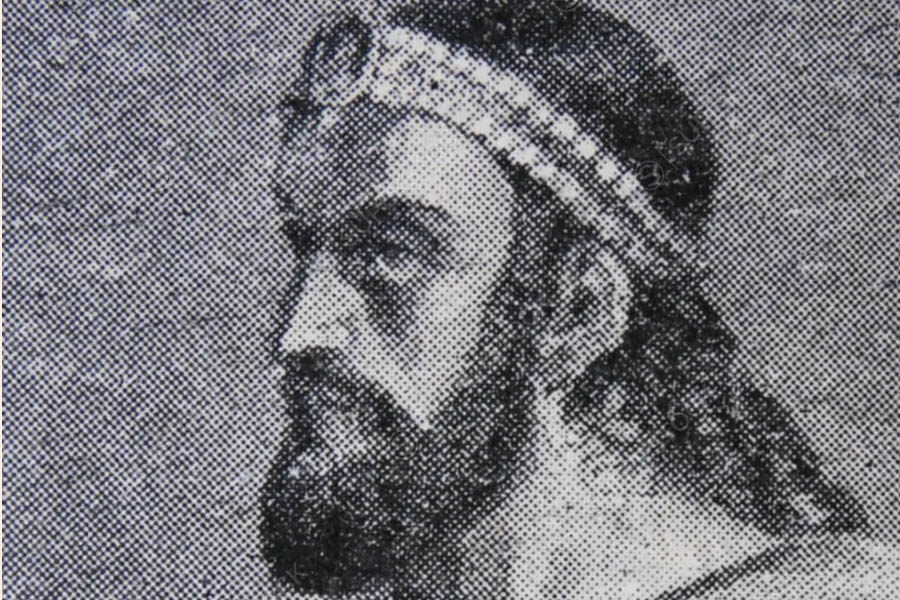
Biography and the Shape of an Uncertain Life
Charibert Of Hesbaye (also recorded under variants such as Charibert de Haspengau or Charibert nobilis in Neustria) stands like a shadow at the dusk of Merovingian memory: present in genealogical trees yet absent from contemporary paperwork. Estimated birth ranges and a death date create the scaffolding of a life rather than a detailed portrait. Conventional reconstructions place his birth between c. 555 and c. 590 and his death around c. 636. Those numbers frame roughly 40–80 years of life across the turbulent 6th and 7th centuries—a span long enough for a family to take root but short on certainties.
Charibert’s world was Neustria, the northwestern division of early medieval Francia. The term nobilis attached to his name suggests aristocratic standing; the designation comes (count) appears in certain traditions as well, implying administrative and military responsibilities over a territorial district. Yet the documentary record offers no surviving charter, no contemporaneous chronicle entry, no tax roll with his seal. Instead, later genealogical compilations and backward inferences from the careers of putative descendants stitch together his biography. The result: a figure whose significance is genealogical more than biographical—an ancestral hinge whose exact bolts are invisible.
Basic Facts at a Glance
| Field | Detail |
|---|---|
| Full name (variants) | Charibert Of Hesbaye; Charibert de Haspengau; Charibert nobilis in Neustria |
| Estimated birth | c. 555–590 |
| Estimated death | c. 636 |
| Region of activity | Neustria (northwestern Francia) |
| Likely status | Nobilis; possibly comes (count) |
| Documentation status | Known from later medieval genealogies; no surviving primary contemporary sources |
| Spouse (traditional) | Wulfgurd (variants: Wulfgard, Wulgrud) — existence debated |
| Principal children (traditional list) | Chrodbert I; Erlebert; Haltbert; an unnamed daughter |
| Associated dynastic lines | Early Robertian ancestors; possible roots of later Capetian lineages (claims debated) |
Family, Names, and Lineage — The Web of Relations
Charibert’s importance is amplified by the names that follow him. Genealogical reconstructions identify several children who populate court records and ecclesiastical rolls in the subsequent generation. The most prominent of these is Chrodbert I (often given dates around c. 600–695), a figure who rises into palace service—at times described as referendarius—and whose descendants form a nucleus for later noble power. Another putative son, Erlebert (c. 595–639), is associated with territorial holdings in the Ternois and is credited with producing Lambert, an abbot and later bishop, whose ecclesiastical rank helped shine retrospective prestige on the family. Haltbert (also rendered Aldebert or Albert) appears in some lists as a monk, perhaps tied to the monastic house of Fontenelle.
A compact family table helps to keep the traditional network visible.
| Person | Relationship to Charibert | Approx. dates / notes |
|---|---|---|
| Wulfgurd (Wulfgard) | Wife (traditional) | Origins unclear; existence debated |
| Chrodbert I | Son | c. 600–695; courtier and palace official |
| Erlebert | Son | c. 595–639; seigneur in Ternois |
| Haltbert (Aldebert) | Son | Dates uncertain; monastic association suggested |
| Unnamed daughter | Daughter | Speculative; infusion into other noble houses inferred |
| Lambert | Grandson (via Erlebert) | Abbot; later bishop; example of family ascent |
| Angadrisma | Granddaughter (via Chrodbert I) | Religious figure associated with later hagiography |
Those names read like rungs on a ladder: not all are nailed down, but enough are visible to suggest vertical movement—sons finding roles in court and church, grandchildren obtaining high offices. The exact parentage and marital links, however, remain contested in scholarly circles; royal connections proposed in some traditions (for example, links to Merovingian kings) are treated skeptically by many historians because of chronological mismatch and lack of contemporaneous evidence.
Career, Wealth, and Social Standing
If Charibert’s narrative lacks campaign lists and tax inventories, it nonetheless contains the basic architecture of aristocratic agency in early medieval Gaul. A comes—if the title applied to him—was more than honorific: it entailed judicial oversight, military command at a county level, and management of land-based revenue. The likely economic base for Charibert would have been landed estates in the regions later known as Hesbaye/Haspengau, with income derived from tenant labor, feudal dues, and agricultural produce. There are no precise numbers for landholdings or wealth; estimations are impossible without charters. What can be inferred, numerically, is that his family produced at least 3–4 named children who reached adulthood and established lines, and that within one generation the family achieved visible courtly and ecclesiastical rank—an accelerated climb by the measures of the age.
A Chronological Outline: Dates, Decades, and Generations
| Period | Approximate years | Key developments |
|---|---|---|
| Putative birth window | c. 555–590 | Charibert is born into a fractured Merovingian polity |
| Family formation | Early 7th century | Marriage to Wulfgurd; birth of children like Chrodbert I and Erlebert |
| Children active | c. 620–670 | Sons serve in courts, monasteries, and episcopal offices |
| Death (traditional) | c. 636 | End of Charibert’s life as dated in genealogical reconstructions |
| Descendants’ consolidation | 7th–10th centuries | Robertian ascent; later genealogical claims lead toward Capetian ancestry |
Time here is a ladder of decades: the 600s are the crucial pivot, when sons enter palace service under kings such as Dagobert I, and when ecclesiastical preferments for grandsons begin to appear. Those numerical anchors—years, age ranges, generational counts—are the best that survives to map a man otherwise known as much by his descendants as by himself.
How to Read Charibert: A Figure of Genealogical Gravity
Charibert Of Hesbaye functions less like a documented protagonist and more like a gravitational center in many family trees. He is the trunk whose branches—sons, grandsons, ecclesiastics, and mayors of the palace—are documented with varying clarity. Think of him as a cairn of stones: no single marker tells the whole story, but the pile itself marks a place of passage, a spot where travelers (later chroniclers and genealogists) left their memory. His life exemplifies early medieval patterns: aristocratic families consolidating local control, placing kin in church and court, and cultivating pedigrees that later generations will magnify into dynastic origin myths.
Namesake Confusions and Cautions in Chronology
The name Charibert recurs in Merovingian onomastics. This recurrence produces confusion: kings, counts, and later counts of Laon share the name in adjacent centuries. Chronological rigor—matching birth and death dates, generational spacing, and documented offices—is essential to avoid conflating distinct individuals. When dates are compared carefully, several high-profile royal attributions collapse under the weight of mismatch; thus many claimed royal parentages for Charibert Of Hesbaye are treated as speculative rather than demonstrable.
The Silent Record and the Echoing Line
For historians, Charibert is proof that absence of direct records does not equal absence of influence. Measured numerically—birth window, death date, generational counts—his outline is coarse but serviceable. The family tables and timelines sketch an enduring legacy: a modest aristocratic house whose descendants plugged into centers of power, turning private patrimony into public office. Like roots hidden beneath soil, Charibert’s memory nourishes a later canopy of names, titles, and claims; the exact depth of those roots, however, remains mostly unseen.