A child born at the edge of a nation finding itself
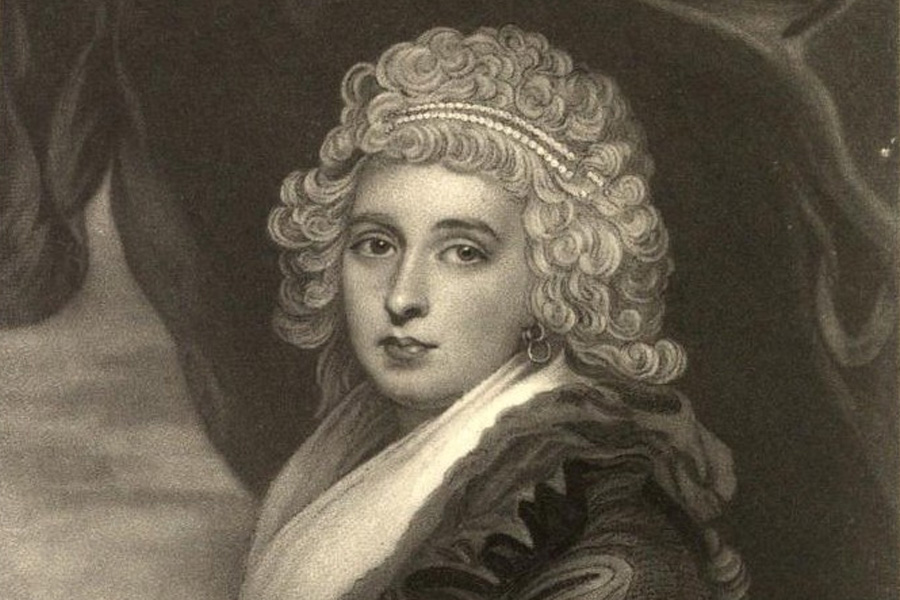
I think Caroline Amelia Smith De Windt was born into a historical storm. Her surname was affixed to the American republic like a wax seal when she was born in New York on January 27, 1795. Not only a daughter in a prominent family. She was born to William Stephens Smith and Abigail Adams Smith, one of early America’s most watched families. Early in life, she inherited letters, politics, duty, and public memory.
That inheritance was heavy. Her grandparents were John Adams, the second US president, and Abigail Adams, one of the era’s most eloquent and enduring voices. Her father’s Smith and Quincy families were likewise in the early republic’s center. Caroline was born into a house where the walls appeared to store their own history. Every conversation counted. Every relationship resonated.
The family web around Caroline Amelia Smith De Windt
I cannot understand Caroline without the family orbit around her. The Adams family was not only famous, it was dense with affection, conflict, and survival. Caroline was the youngest surviving child in a family marked by loss and resilience.
| Family member | Relationship to Caroline | Notes |
|---|---|---|
| William Stephens Smith | Father | Former Continental Army officer, later a federal official, and a man whose finances were often strained |
| Abigail Adams Smith | Mother | Eldest child of John and Abigail Adams, known for intelligence and emotional closeness to her family |
| John Adams | Grandfather | Statesman and President of the United States |
| Abigail Adams | Grandmother | One of the most important women in early American letters |
| Margaret Smith | Grandmother | Paternal grandmother |
| John Smith | Grandfather | Paternal grandfather |
| William Steuben Smith | Brother | Older brother, part of the next generation of the family line |
| John Adams Smith | Brother | Another sibling in the Adams-Smith branch |
| Thomas Hollis Smith | Brother | Died young, a reminder of the fragility of family life in that era |
| John Peter DeWindt | Husband | Married Caroline in 1814 and became the head of the household she built |
| Caroline Elizabeth DeWindt | Daughter | Later connected to Andrew Jackson Downing and John James Monell |
| Julia DeWindt | Daughter | One of the daughters in the large family |
| Elizabeth DeWindt | Daughter | Later married Christopher Pearse Cranch |
| Louisa W. DeWindt | Daughter | Later married Clarence Cook |
| Anna Maria DeWindt | Daughter | Part of the next generation of the family |
| John Adams DeWindt | Son | Named to carry the Adams memory forward |
| William Stephens DeWindt | Son | Name reflects the family’s habit of preserving lineage |
| Isabella Adams DeWindt | Daughter | The Adams name lived on in her |
| Emily Augusta DeWindt | Daughter | Later married Frederick Clarke Withers |
| Arthur DeWindt | Son | One of the sons in the household |
| Francis Adams DeWindt | Son | Another bearer of the family name |
| Mary Catherine DeWindt | Daughter | Part of the large family circle |
I see this family tree like a lantern with many panes. Each branch catches the light differently, but the same flame runs through them all. Caroline was not isolated from this web. She lived inside it.
Marriage, home, and children
Caroline married John Peter DeWindt on 11 September 1814. In her world, marriage was not simply a private decision. It was also a relocation of identity, a merging of households, names, land, and expectations. John Peter DeWindt was associated with Cedar Grove in Fishkill-on-the-Hudson, and family memory places him among the property holding and transportation minded figures of the Hudson Valley.
Their marriage produced a large family, and that alone tells me something important. Caroline’s life was not narrow. It was crowded with births, children, domestic management, and the continuous work of keeping a family structure from fraying at the edges. At least 12 children are listed in family records, which means her days were likely full of movement and sound, like a house with many clocks all striking at once.
The children carried the family line into other notable households. Caroline Elizabeth DeWindt became connected to Andrew Jackson Downing and later John James Monell. Elizabeth married Christopher Pearse Cranch. Louisa married Clarence Cook. Emily Augusta married Frederick Clarke Withers. These marriages spread the family outward into the cultural life of the nineteenth century. Through her children, Caroline’s household touched architecture, art, literature, and design.
Her writing and her place in the Adams memory
Caroline was not only a mother and a wife. She was also an editor and author. That matters. She helped preserve the voice of her mother, Abigail Adams Smith, by bringing out a three volume collection of correspondence. In doing so, she acted like a careful hand brushing dust from a portrait. The image remained, even if later scholars would judge her editing style as selective or freer than modern standards allow.
She also published Melzinga: A Souvenir in 1845. That title alone suggests intimacy, memory, and a taste for sentiment. I read her literary work as a form of survival. She was not trying to become a public celebrity. She was making a family world legible. She was taking private memory and giving it shape.
Her writing feels especially significant because the Adams family lived so much in letters. They preserved feelings on paper. They argued on paper. They loved on paper. Caroline inherited that habit and turned it into published form. In a sense, she was both archivist and storyteller, standing at the threshold between the spoken home and the printed page.
Money, inheritance, and the burden of family fortune
Money—or its absence—shaped Caroline’s existence. Her father, William Stephens Smith, lost money on speculation and land. Trouble like water slipping through a damaged basin may empty a household. A renowned name did not always shield a family from debt, dependence, or instability.
Sometimes inherited money stabilized the family. Caroline received notification of John Adams’s estate settlement in 1826, stating her stake as $3,000. Not only is that amount important, but it shows how the family’s fame affected their finances. Land, letters, and inheritances traveled together.
I also see fragility in survival. A later house fire certainly destroyed many letters and records. Caroline’s life is more distant but vivid after that loss. They shine because of the missing bits.
A life carried through dates, letters, and Hudson River memory
Caroline’s life can be traced through a few strong dates. She was born in 1795. She married in 1814. Her father died in 1816. Her grandmother Abigail Adams died in 1818. Her grandfather John Adams wrote to her in 1820 and 1821, showing continued affection and attention. In 1826, John Quincy Adams addressed her part in the estate settlement. She published Melzinga in 1845. She died in the Hudson River steamboat disaster of 28 July 1852.
That death gives her life a tragic final note. The disaster on the Henry Clay has its own grim place in river history, and Caroline’s name became part of it. I think that is why her story lingers. It has the arc of a family chronicle and the sharp break of a historical accident.
FAQ
Who were Caroline Amelia Smith De Windt’s parents?
Her parents were William Stephens Smith and Abigail Adams Smith. That made her a direct descendant of the Adams family on her mother’s side and tied her to an influential network of political and social families on both sides.
How many children did she have?
Family records list 12 children. Their names include Caroline Elizabeth, Julia, Elizabeth, Louisa W., Anna Maria, John Adams, William Stephens, Isabella Adams, Emily Augusta, Arthur, Francis Adams, and Mary Catherine.
What did Caroline Amelia Smith De Windt do in her own right?
She was an editor and author. She helped preserve her mother’s letters in published form and later wrote Melzinga: A Souvenir in 1845. Her work stands as a bridge between private family memory and public print.
Why is she historically interesting?
She sits at the intersection of major themes in early American life: presidential family history, women’s authorship, inheritance, domestic labor, and the fragile continuity of memory. Her life is a thread that runs through the Adams legacy, and it still holds.